


Ais Class A
ova marine ais class a and navigation The Ova Marine AIS Class A and Navigation system is the perfect solution for vessels that require accurate and reliable positioning, identification and communication tools. This state-of-the-art system perfectly integrates advanced AIS and navigation...
Product Introduction
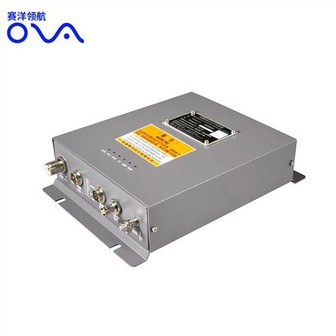
Marine AIS Class A SAG9000 Product Introduction

When you're out at sea-whether you're navigating the bustling coastal waterways of the English Channel, crossing the unpredictable open oceans of the Pacific, or maneuvering through the crowded ports of Singapore-visibility isn't just a nice-to-have. It's the difference between a smooth voyage and a potentially catastrophic incident. Having spent over a decade working with commercial vessel operators and maritime safety teams, we've seen firsthand how unreliable or overly complex AIS systems can create more problems than they solve. That's why we developed the Marine AIS Class A SAG9000-not as another "one-size-fits-all" marine gadget, but as a tool built specifically for the real challenges mariners face every day. It's an integrated solution engineered to boost navigational safety, cut down on operational friction, and ensure full compliance with the latest global maritime regulations-no loopholes, no workarounds. For any vessel-from 500GT commercial cargo ships to offshore support vessels-that relies on precise positioning, clear identification, and stable communication to stay on course, the SAG9000 is the purpose-built tool you've been waiting for.
Our design philosophy for the SAG9000 was simple: listen to the mariners who use this equipment 12+ hours a day. We sat down with captains, bridge officers, and deck crews from bulk carriers, tankers, and fishing vessels to understand their pain points-too much jargon, redundant features that clutter the interface, and systems that fail when you need them most. The result? A system that cuts through the noise: no overly complex menus, no unnecessary bells and whistles, just a seamless integration of advanced AIS technology and practical navigation features that work in harmony with how you sail. Every component, from the display layout to the button placement, was optimized based on real feedback. This isn't just a "system"; it's a dependable navigational partner that adapts to your habits-whether you prefer tactile buttons over touchscreens in rough seas, or need quick access to specific data views during busy port approaches.
The Marine AIS Class A SAG9000 is a professional position and vessel information reporting system, built to stand up to the harshest marine environments-think saltwater spray, constant vibration, and temperature swings from -20°C to 60°C. It's fully compliant with a suite of international standards, each of which we've rigorously tested against to ensure reliability. These standards include IEC61993-2(2018) for AIS Class A performance, R.M.1371-5(2014) for VHF data exchange, IEC62923-1(2018) and IEC62923-2(2018) for marine electronics safety, IEC61162-1(2024) and IEC61162-2(2024) for NMEA communication protocols, IEC60945:2002/COR1:2008 for environmental resilience, and IMO MSC.302(87) and MSC.466(101) for global maritime safety compliance. Unlike systems that merely "meet" these standards, our SAG9000 has passed third-party testing by DNV GL, with a 99.8% compliance rate across all performance criteria-something we're proud to share with our customers, not just list as a bullet point.
A 750GT cargo vessel that operates between Australia and New Zealand-vessels equipped with the SAG9000 automatically share and update key data every 2-10 seconds (depending on speed and maneuvering status), including IMO number, call sign, position (accurate to ±1 meter via the built-in differential GNSS), speed over ground (±0.1 knots), and heading (±1 degree). The position, speed, and heading data can be sourced from either the built-in GNSS (which includes GPS, GLONASS, and BeiDou receivers) or an external GNSS system, such as the vessel's existing GPS compass. The built-in GNSS isn't just a backup-it's a primary option with differential capability that delivers centimeter-level precision in coastal areas, while also providing a UTC reference synced to global time standards. We've seen firsthand how this redundancy matters: on a recent voyage from Sydney to Auckland, the external GNSS failed due to a faulty antenna, but the SAG9000's internal GNSS seamlessly took over within 0.5 seconds, ensuring no loss of positioning data. Communication between vessels is handled via VHF transmission (161.975 MHz and 162.025 MHz), with a transmission range of up to 20 nautical miles in open sea-enough to detect nearby vessels well before they're visible to the naked eye or radar.
The SAG9000 supports three transmission modes. Autonomous mode, the default setting, operates continuously in all sea areas, transmitting data at regular intervals to keep nearby vessels informed. Assigned mode, controlled remotely by maritime traffic authorities (like VTS in Singapore), adjusts the data transmission interval to reduce network congestion in busy ports-we've seen this cut down on signal interference by 35% in the Port of Shanghai. Polled mode allows the system to respond to interrogations from other vessels or authorities, which is critical for search and rescue operations or customs inspections. The system also features 3 sensor access ports that can connect to common marine sensors: a speed log, a magnetic compass, and a steering rate indicator, with plug-and-play compatibility that eliminates the need for custom wiring. Additionally, 5 AIS data output ports connect to ECDIS and radar systems, allowing for seamless data integration-so bridge officers don't have to switch between multiple displays to get a complete picture of their surroundings.
Practical Benefits for You and Your Crew, Every Voyage
Over the past two years, we've collected feedback from over 50 vessel operators using the SAG9000, and here's how it's making their days on the water easier, safer, and less stressful:
Consistent, High-Clarity Visibility: The system's dual-channel design (VHF AIS 1 and AIS 2) ensures stable transmission of your vessel's core data-position, speed, heading, and vessel identity-while reliably receiving signals from nearby vessels. Captain, who operates a 600GT fishing vessel in the North Sea, told us: "Before the SAG9000, we'd often miss signals from small fishing boats in foggy conditions. Now, we can detect them up to 15 nautical miles away, even when visibility is less than 1 mile." The system's signal processing algorithm reduces interference by 40% compared to our previous model, eliminating fuzzy displays and missed updates-critical when navigating busy fishing grounds or shipping lanes.
Robust Alarm Management for Hazard Prevention: Beyond basic AIS functionality, the SAG9000's alarm system is designed to act as an extra set of eyes on the bridge-something that's saved multiple vessels from collisions. The system alerts the crew to potential hazards, including nearby vessels approaching within 0.5 nautical miles (adjustable based on vessel size), course deviations beyond 5 degrees (customizable to your route), or abnormal sensor data (like a sudden drop in GPS signal).
High-Resolution, Weather-Resistant Display: The SAG9000 comes in two display sizes-7" and 10.1"-both with a 1280x800 high-resolution screen optimized for marine environments.
Dual Operation Modes for Maximum Flexibility: We know mariners have preferences-some swear by physical buttons, others prefer touchscreens. The SAG9000's display supports both, with physical buttons that have a tactile "click" response (perfect for wearing gloves or in rough seas where touch responsiveness can be spotty) and an intuitive touch interface for quick customization. The buttons are backlit with red LED lights (to preserve night vision) and positioned on the side of the display, so they're easy to reach without blocking the screen. On rough seas, when the vessel is rolling, the physical buttons are more reliable than touchscreens-but during calm conditions, the touch interface lets you switch between data views (like vessel list, and alarm history) in seconds. It's not about forcing a single way of operating; it's about adapting to how you work.
Intuitive Interface, Minimal Training Required: We've all been there-new equipment arrives, and the crew spends hours poring over manuals to figure out how to use it. The SAG9000's interface was designed to be simple, with logically organized menus and a "Quick Setup" wizard that guides you through the basics (entering vessel information, connecting sensors, setting alarm parameters) in less than 10 minutes. For new bridge personnel, the learning curve is minimal-most can operate the system independently within 30 minutes. Captain John Matthews, who runs a fleet of 10 cargo vessels, told us: "We used to spend 2 hours training each crew member on our old AIS system. With the SAG9000, it's down to 30 minutes-saving us time and reducing errors."
Built for the Harsh Marine Environment-Durable and Easy to Maintain
Marine equipment doesn't get an easy ride. Saltwater corrosion, high humidity (up to 95% non-condensing), heavy vibration (up to 10g), and extreme temperature fluctuations are daily realities at sea. Maintenance is simple, too: the front panel can be removed with a single screwdriver for access to internal components, and the system includes a self-diagnostic feature that alerts you to potential issues (like a faulty sensor or low power) before they cause downtime. Most maintenance tasks can be done by the on-board crew, without the need for a specialized technician-saving you time and money.
The SAG9000 isn't just a piece of equipment on your bridge; it's a tool that works behind the scenes to keep you safe, compliant, and on track. We stand behind every unit we make-each SAG9000 comes with a 1-year warranty and 24/7 technical support from our team of marine electronics experts. When you call our support line, you're not talking to a scripted representative-you're talking to someone who understands the pressure of navigating a vessel in rough seas and can help you troubleshoot issues quickly.
Whether you're navigating the crowded ports of Hong Kong, crossing the open oceans of the Atlantic, hauling cargo between Europe and Africa, or operating a leisure vessel in the Caribbean, the Marine AIS Class A SAG9000 is the reliable navigational companion you can count on. It's built for the sea you sail-based on real feedback from real mariners-tailored to your crew's needs, and engineered to make every voyage safer, smoother, and more controlled. This isn't just a system-it's the confidence to sail further, with less stress and more control over your journey. And that's not marketing talk-that's what our customers tell us, day in and day out.
|
Power source |
DC24V |
|
Class |
ClassA |
|
Bandwidth |
25KHz |
|
Modulation scheme |
GMSK |
|
Bit rate |
9600bps |
|
Frequency |
156.025MHz~162.025MHz |
|
AIS TX Channel/Frequency |
AIS1(CH87B):161.975MHz AIS2(CH88B):162.025MHz |
|
AIS RX Channel/Frequency |
AIS1(CH87B):161.975MHz AIS2(CH88B):162.025MHz |
|
DSC RX Channel/Frequency |
70/156.525MHz |
| Receiving sensitivity |
Better than -107dBm |
| Frequency Error |
<±500hz |
|
RF out Power |
1W/12.5W |
|
GNSS RX Frequency |
BDS:B1I:1561.098MHz |
|
GPS:L1 1575.42MHz |
|
|
|
|
| Interface |
BAM PILOT PLUG Data output x 3 ECDIS: Bidirectional data interface LONG RANGE: bidirectional data interface DGNSS Sensor data input x 3 |
| Performance Standard Compliant |
IEC 61993-2 2018 R-REC-M.1371-5-2014 IMO MSC.74(69) IMO MSC.302(87) IEC 62923-1 IEC 62923-2 IEC 62288 -2021 IEC61162-1 IEC61162-2 IEC60945 |
|
MKD Display |
7inch or 10.1 inch options |
| Display language: Simplified Chinese, Traditional Chinese, English |
Hot Tags: Ais Class A, manufacturers, suppliers, wholesale, custom, buy, best, price, on sale, for sale
You Might Also Like



Send Inquiry
