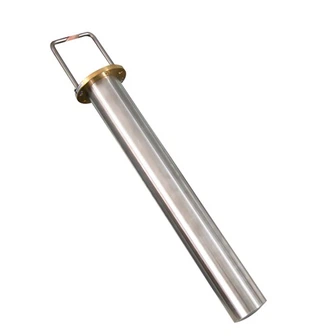

Class A AIS signal strength
Mastering the Mighty Pulse: Understanding Class A AIS Signal Strength
Imagine navigating a busy shipping lane shrouded in fog. Your radar paints a picture, but it's the steady stream of AIS data – ship names, courses, speeds – that truly illuminates the seascape, preventing collisions. At the heart of this vital communication lies signal strength. For Class A AIS transponders, mandated on large commercial vessels, mastering this invisible force is paramount for maritime safety and efficiency. This isn't just about "bars on a screen"; it's about ensuring critical data reaches its destination reliably, especially when visibility fails or traffic intensifies.
Why Signal Strength is Your Silent Guardian:
Reliable Detection & Tracking: Strong signals ensure your vessel is clearly "heard" by other ships and shore stations within its intended range, maximizing situational awareness for everyone. A weak signal might mean you disappear from another bridge's display, creating a dangerous blind spot.
Extended Communication Range: Robust signals travel farther, providing crucial data to vessels and traffic services over greater distances, enabling earlier collision avoidance maneuvers and efficient route planning. Think of it as shouting clearly versus whispering in a storm.
Resilience Against Interference: The maritime VHF band (where AIS operates) is crowded. Stronger signals better resist degradation from background noise, competing transmissions (like VHF voice), or atmospheric conditions, maintaining data integrity. Weak signals are easily drowned out.
Effective DSC & Safety Messaging: Class A AIS handles critical Digital Selective Calling (DSC) and safety-related text messages. Consistent signal strength ensures these urgent communications are received promptly and reliably.
Decoding the Factors Shaping the Signal:
Your Class A AIS isn't shouting into a void; several key elements sculpt its signal strength:
1. Transmitter Power (The Core Engine):
Class A units are mandated to transmit at 12.5 Watts (or 2 Watts in certain low-power modes near shore). This is significantly higher than Class B units (typically 2W).
Crucially: A mere 3 dB drop in power (roughly halving the effective wattage) can reduce the reliable communication range by up to 30%. Maintaining full, regulated power output is non-negotiable for performance. Regular checks are essential.
2. Antenna System: The Critical Launchpad (Often the Weakest Link):
Antenna Gain: A high-gain antenna (e.g., 6 dBd) focuses energy more effectively towards the horizon than a low-gain one (e.g., 0 dBd), significantly boosting effective signal strength in the desired direction. It acts like a spotlight versus a bare bulb.
Cable & Connections: VHF signals suffer significant losses in coaxial cable, especially over distance and at higher frequencies. Using low-loss cable (e.g., LMR-400, Ecoflex 10) and ensuring perfect, waterproof connections (avoid adapters!) is vital. A 3 dB loss here effectively halves your transmitter's power at the antenna.
VSWR (Voltage Standing Wave Ratio): This measures how efficiently power transfers from the transmitter, through the cable, into the antenna. A high VSWR (above 1.5:1 or certainly 2:1) indicates reflected power, meaning less radiates outwards and can potentially damage the transmitter. Aim for VSWR < 1.5:1. Annual testing is recommended.
Height & Location: The mantra "height is might" holds true. Mounting the antenna as high as possible, clear of obstructions (masts, cranes, funnel exhausts), provides a clearer path for the signal to propagate over the horizon. Even a few meters can make a substantial difference in range.
3. Environmental Factors (The Uncontrollable):
Weather: Heavy rain, fog, or snow can absorb or scatter VHF signals, causing temporary attenuation (signal loss).
Sea State: Rough seas can cause signal fading due to multipath reflections off waves.
Atmospheric Ducting: Sometimes, unusual atmospheric conditions can trap signals, causing unexpected long-range propagation or localized nulls. These are generally transient.
Measuring the Invisible: Tools for Insight
While you can't "see" signal strength directly, specialized tools provide the necessary insight:
Dedicated AIS Signal Strength Monitors/Testers: Professional tools can measure the actual received signal strength (often in dBµV or dBm) of your AIS transmissions, providing the most accurate assessment. These are used during installation and periodic surveys.
VSWR Meters: Essential for diagnosing antenna system health. A sudden increase in VSWR indicates a problem (damaged cable, connector, or antenna).
Spectrum Analyzers: Offer the most comprehensive view, showing signal strength across the VHF band, identifying potential sources of interference, and visualizing your AIS signal's quality and power.
Optimizing Your Class A AIS Signal: A Captain & Technician's Checklist
Antenna Ascendancy: Prioritize the highest, clearest location possible. Invest in a quality, dedicated AIS antenna with appropriate gain.
Cable & Connection Perfection: Use the shortest feasible run of low-loss coaxial cable. Meticulously install and weatherproof all connectors. Avoid unnecessary adapters. Label connections clearly.
VSWR Vigilance: Test VSWR during installation, after any work on the antenna system, and annually. Address any reading above 1.5:1 immediately.
Power Check: Verify transmitter output power meets specifications (12.5W) during commissioning and periodic maintenance. Use calibrated equipment.
Interference Hunting: If performance suddenly drops, use a spectrum analyzer or consult experts to identify potential sources of interference (faulty electronics, nearby strong transmitters).
Regular Maintenance: Include the AIS antenna, cabling, and connections in the vessel's planned maintenance system. Look for chafing, corrosion, or physical damage.
The Unseen Force with Visible Impact
Class A AIS signal strength is far more than a technical metric; it's the fundamental enabler of the safety and efficiency benefits AIS provides. By understanding the critical factors – especially the paramount importance of the antenna system's health and configuration – and implementing rigorous installation and maintenance practices, ship operators and technicians ensure their vessel's vital "voice" is heard loud and clear across the oceans. Investing in signal integrity is an investment in collision avoidance, efficient operations, and ultimately, the safety of lives at sea. In the complex, dynamic environment of maritime traffic, a strong, reliable AIS signal is an indispensable asset, silently safeguarding your voyage.