
Marine Navigation Echosounder: Working Principles, Types and Core Maritime Applications
Marine Navigation Echo Sounder: Working Principles, Types and Core Maritime Applications
As a fundamental navigation instrument, the Marine Navigational Echo Sounder (also known as a depth finder) is designed to measure water depth accurately by utilizing ultrasonic wave propagation. It plays an irreplaceable role in preventing ship grounding, optimizing navigation routes, supporting underwater engineering, and ensuring maritime safety. With the global marine economy booming- the global echosounder market size is expected to reach $17.5 billion in 2026 with a CAGR of 9.8%-11.2% - the demand for high-performance echosounders continues to surge across commercial shipping, offshore exploration, and coastal development sectors.
Core Working Principles
All modern marine echo sounders operate based on the echo principle of ultrasonic waves, with consistent basic working logic but differentiated technical implementations :
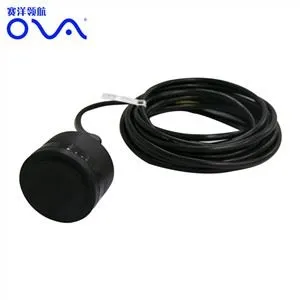
The instrument's transducer converts electrical signals into high-frequency ultrasonic pulses (typically 20kHz-200kHz) and transmits them vertically or fan-shaped towards the seabed. When these pulses encounter the seabed, underwater obstacles, or sediment layers, they reflect back as echo signals. The transducer receives the echoes and converts them back into electrical signals, which are then processed by the control system. By calculating the time difference (t) between signal transmission and reception, combined with the average speed of sound in seawater (approximately 1500 m/s), the echosounder automatically computes water depth using the formula: Depth = (Sound Speed × Time Difference) / 2 - Vessel Draft. Advanced models also integrate sound speed correction to offset deviations caused by water temperature, salinity, and pressure.
Main Types of Marine Echo Sounders
Based on technical specifications, measurement range, and application scenarios, marine echosounders are mainly categorized into four types:
Key Maritime Applications
1. Single-Beam Echo Sounder: The most widely used type in commercial shipping, featuring compact size, low cost, and reliable performance. It emits a single ultrasonic beam to measure the depth directly below the transducer, with a measurement range of 0.1m to 2000m and accuracy of around ±2%. Ideal for cargo ships, fishing boats, and inland vessels, it accounts for 65%-68% of the global market share.
2. Multi-Beam Echo sounder: A high-precision instrument with dozens of independent receiving transducers arranged in a fan shape. It can cover a wide area (5.5-6 times the water depth) with a single transmission, generating hundreds of depth data points simultaneously to form 3D seabed topographic maps. Widely used in offshore oil exploration, seabed mapping, and underwater engineering, its market penetration is expected to rise from 52% in 2023 to 68% in 2030.
3. Side-Scan Sonar Echo Sounder: Focuses on horizontal seabed imaging rather than pure depth measurement. It emits ultrasonic beams to both sides of the vessel, capturing high-resolution images of seabed features, shipwrecks, underwater pipelines, and marine organisms. Essential for underwater archaeology, marine resource exploration, and pipeline inspection.
4. Portable Depth Finder: Lightweight and battery-powered, designed for small boats, yachts, and emergency backup. It features simple operation and waterproof casing, suitable for shallow water areas (0.3m to 100m) such as coastal zones and inland rivers.
Guide Conclusion: Looking for reliable marine navigation echo sounders for your fleet? Our product range includes single-beam, multi-beam, and portable models, tailored to commercial, offshore, and research needs. Contact us now for customized specifications and competitive quotes.