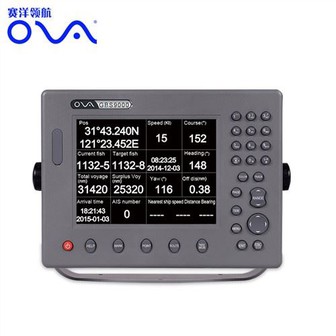

Design Philosophy And Technical Principles Of Class A Shipborne Automatic Identification Systems
Design Philosophy and Technical Principles of Class A Shipborne Automatic Identification Systems
Introduction of The Class A AIS
The Class A Shipborne Automatic Identification System (AIS) is a cornerstone of modern maritime safety and navigation. Mandated for use on commercial vessels under the International Maritime Organization (IMO) Safety of Life at Sea (SOLAS) Convention, Class A AIS integrates advanced communication and positioning technologies to enhance situational awareness, prevent collisions, and streamline maritime traffic management. This article explores the design philosophy behind Class A AIS and delves into its core technical principles.
Design Concept for class A AIS
AIS class A was developed with three main objectives in mind.
1. Enhanced safety: By enabling real-time ship tracking and data exchange, AIS reduces the risk of collisions in congested waterways and poor visibility conditions.
2. Operational efficiency: AIS supports the optimisation of route planning, port management and resource allocation by providing transparent traffic data. 3. Regulatory compliance: As a standardised system, AIS can be used as a tool for the management of ships.
3. Regulatory compliance: As a standardised system, Class A AIS ensures the interoperability of the global maritime network and compliance with international regulations.
Its design emphasises automation, reliability and scalability. Unlike Class B systems, which are used on smaller vessels, Class A equipment prioritises high frequency data transmission, robust signal strength and integration with onboard navigation systems to meet the demanding requirements of large merchant ships.
Core technology components
The class A AIS system relies on a combination of hardware and software modules.
1. VHF transceiver: Operates in the 161.975-162.025 MHz band and is used to broadcast and receive AIS information. the Class A system uses two dedicated channels (AIS 1 and AIS 2) with a transmit power of 12.5 W to ensure long range communications (up to 40 nautical miles).
2. Global Positioning System (GPS): Provides accurate position, speed and heading data.
3. inertial and environmental sensors: collect additional parameters such as heading, rate of turn and draft.
4. Central Processing Unit (CPU): manages data format, encryption and prioritisation according to ship's dynamics.
5. Display interface: Integration with Electronic Chart Display and Information System (ECDIS) or dedicated AIS display for crew visualisation.
Data transfer mechanism
Class A AIS uses the Self-Organising Time Division Multiple Access (SOTDMA) protocol, a key innovation to ensure efficient use of bandwidth.SOTDMA allows vessels to autonomously reserve time slots for broadcasting data, minimising packet collisions even in high density traffic areas.
1. message type:
- Static data: Ship name, IMO number, size and cargo type (updated every 6 minutes).
- Dynamic data: position, speed, heading and navigational status (updated every 2-10 seconds, depending on vessel speed).
- Voyage-related data: destination, estimated time of arrival and route plan (updated every 6 minutes).
2. Data exchange workflow:
- The AIS unit continuously receives GPS and sensor input.
- The packets are formatted according to IEC 61993-2.
- The information is broadcast via VHF and simultaneously decoded from nearby vessels.
- The received data is displayed on the ECDIS, enabling the crew to monitor the surrounding traffic.
Integration with maritime systems
Class A AIS does not operate in isolation. It can be connected to the following systems
- Radar systems: Cross-verify target tracking for redundancy.
- Vessel Data Recorder (VDR): Records AIS data for post-incident analysis.
- Shore Base Station: Facilitates Vessel Traffic Services (VTS) and Port Authorities to monitor and manage marine traffic.
Applications and Impacts
1. Collision Avoidance: By tracking in real time, crews can predict the actions of nearby vessels.
2. Search and Rescue (SAR): In emergency situations, AIS data helps to locate vessels in distress.
3. Environmental protection: Monitoring ship routes helps prevent illegal fishing and oil spills.
4. supply chain optimisation: ports use AIS to predict arrival times and reduce congestion.
While AIS systems have revolutionised maritime safety, challenges remain:
- Data overload: Bandwidth can be strained in high traffic areas.
- Cybersecurity risks: Vulnerabilities in data transmission require increased encryption.
Future advances may integrate satellite-based AIS (S-AIS) with global coverage, AI-driven predictive analytics for collision risk assessment, and hybrid communication protocols to support autonomous shipping.