



Marine Anemometer
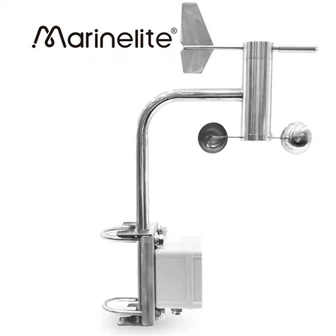
The marine anemometer is an instrument that measures wind speed and direction 1.Product Introduction of the marine anemometer The Mi9000 anemometer is a combination of wind cup wind speed sensor and wind vane, which meets the performance and functional requirements of ISO international...
Product Introduction
Solve the Hidden Challenge of Navigation Safety:
Mi9000 Marine Anemometer
Sudden gusts or false wind readings are a common cause of difficult docking, course deviation, and even accidents. The Mi9000 is designed to eliminate this uncertainty - it's not just an anemometer, it's your vessel's "weather advisor" for navigation decisions.
From fishing boats to large cargo ships, from coastal operation to ocean voyages, the Mi9000 combines stainless steel construction, NMEA 0183 plug‑and‑play integration, and three wind calculation modes to turn raw wind data into actionable safety commands.
Request Marine Quote →🌊 Scenario 1: Trusted Partner in Harsh Marine Environments
Salt spray, vibration, heavy rain, freezing conditions - ordinary plastic anemometers often fail within one service cycle at sea. The Mi9000 series features a full stainless steel housing and internal encoder, having passed 72‑hour salt spray tests and 5Hz vibration tests before shipment.
- ✅ IP56 Protection: Dust‑tight and resistant to wave impact, suitable for any deck location.
- ✅ Optional Smart Heating: Automatic/manual de‑icing ensures stable data output even at -30°C in high‑latitude routes.
- ✅ Wide Voltage Input (11–35V DC): Tolerates shipboard power fluctuations without extra voltage stabilizers.
Compared to plastic anemometers: The Mi9000S does not crack due to UV ageing, giving more than 3x longer service life at sea.
Scenario 2: Seamless Integration with Your Navigation System
Shipyards and integrators fear one thing most: "Signal mismatch – the device doesn't talk to our system." The Mi9000 natively supports NMEA 0183 protocol + RS485/RS422 interface, allowing direct connection to VDR, ECDIS, and multi‑function displays.
- Plug & Play: Standard 5‑core shielded cable, compatible with major brands like Furuno, SIMRAD, Raymarine, and others.
- Multi‑Signal Fusion: Automatically accepts data from GNSS, speed log, and gyrocompass - no protocol converter needed.
- Dual Output: Sends wind data simultaneously to both the bridge and the engine room monitoring system.
Interface wiring diagram and compatibility list with major brands are available. Our technical engineers respond to integration questions within 24 hours.
Scenario 3: Three Wind Modes - Each Built for a Specific Decision
Relative Wind
Wind as felt on the vessel, directly measured by the sensor. Used for real‑time look‑out and weather display - judging the immediate wind effect on the hull.
True Wind
Calculated by combining vessel speed and heading. Represents the actual sea surface wind field. Used for route planning, weather routing, and avoiding dangerous weather systems.
Ground Wind
Calculated using GNSS speed over ground. Provides a ground‑referenced wind reference. Used for docking/undocking, piloting operations, and port wind data comparison.
If speed log or compass signals are temporarily lost, the system automatically falls back to GNSS data - ensuring no black screen during critical navigation periods.
5 Most Frequently Asked Questions by Ship Owners & Chief Engineers
(1) The Mi9000S full stainless steel version costs more than plastic anemometers. Is it worth it?
Absolutely - in service life and stability. Plastic housings typically crack and leak within 1–2 years at sea, causing encoder corrosion and data jumps. The Mi9000S uses 316 stainless steel and an absolute encoder, with a design life exceeding 8 years. The annual average cost is actually lower, and you avoid unscheduled dry‑dock for replacement.
(2) Our onboard navigation system is quite old and doesn't have NMEA 2000. Can we still connect?
Yes. The Mi9000 simultaneously supports NMEA 0183 (RS422) and RS485 output - the standard interface on most marine equipment for the past 20 years. We provide detailed wiring diagrams; even an old CRT radar display can receive the data.
(3) In heavy seas with severe rolling, will wind data fluctuations cause autopilot errors?
No. The device includes dedicated maritime filtering algorithms and damping settings. It outputs physically valid wind changes, not instantaneous spikes from mechanical shaking. When connected to an autopilot, you can further adjust the averaging time window.
(4) Does it display true wind directly, or do we need an external processor?
Built‑in calculation. Once you feed speed log and compass data into the anemometer via NMEA input, the internal processor calculates true wind in real time and outputs it on the same cable. No extra black box is required.
(5) Our fleet has 15 vessels. We want a single model with our company logo. Do you support that?
Yes - OEM/ODM is fully supported. As the original manufacturer, we can provide: laser‑engraved logos on housings, custom cable lengths, preset output sentence formats, and batch calibration certificates. Contact our sales team for a fleet quotation.
Technical Specifications
| Item | Specification |
|---|---|
| Model | Mi9000 Series |
| Power Supply | DC 24V (wide range 11–32V) |
| Wind Direction | 0 ~ 359° |
| Wind Direction Accuracy | ±2° |
| Wind Speed Range | 2 ~ 60 m/s |
| Wind Speed Accuracy | ±0.5 m/s (<10 m/s); ±5% of reading (≥10 m/s) |
| Protection Grade | Sensor: IP56; Display unit: IP20 |
| Communication | RS485, NMEA 0183 |
| Optional Function | Automatic / manual heating |
Hot Tags: marine anemometer, manufacturers, suppliers, wholesale, custom, buy, best, price, on sale, for sale
You Might Also Like




Send Inquiry
