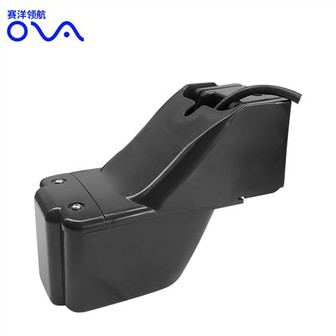

The Evolution of Satellite Compass Technology
The Evolution of Satellite Compass Technology
Satellite compasses are a key component in modern navigation systems used in various industries such as marine, aviation, and land transportation. The technology of satellite compasses has significantly evolved throughout the years, and there is no doubt that it will continue to do so in the future.
The past of satellite compasses was characterized by the use of traditional magnetic compasses, which have been around for hundreds of years. These traditional compasses were simple devices based on a magnetic needle pointing towards magnetic north. However, they were not always the most reliable option due to the influence of the Earth's magnetic fields, which can sometimes cause compass errors.
As technology advanced, so did the satellite compass. The present generation of satellite compasses use Global Navigation Satellite System (GNSS) technology to calculate accurate heading information. This provides fast and precise results that are immune to magnetic disturbances, making them ideal for high-precision applications. GNSS is also used to enhance positioning accuracy and add features such as automatic vessel identification and collision warning.
Characteristics of satellite compass
1. Satellite compass has fast startup
Satellite compass does not need mechanical equipment such as gyro ball, the steering system is directly linked to the satellite terminal (such as Beidou/GPS), eliminating the stabilization time of the gyro ball, in general, the start-up time is less than 5 minutes.
2. Fast tracking speed
The signal received by the steering system is derived from the satellite signal (such as Beidou/GPS) signal, so the steering system tracking speed is fast.
3. No mechanical parts
Satellite compass almost no mechanical parts, for the crew to save the most troublesome and most afraid of the most time-consuming maintenance work.
4.No Repeatable Costs
Satellite compass has no mechanical parts, especially no gyro ball such as expensive mechanical parts, can save a lot of replacement and inspection costs.
5. Simple operation
Satellite compass is simple to operate, with quick start, signal recapture, fast heading update, high steering rate and other characteristics, without the need to adjust the latitude and speed error of the tedious work.
6. It is almost not affected by ship's swaying, vibration, latitude, speed and ambient temperature.
In addition to the above advantages, satellite compass also has shortcomings. As the satellite compass is closely related to the satellite in space, it completely relies on the satellite to provide direction for the ship to "lead the way", once there is no satellite signal, the ship becomes "blind", which is also the most fatal weakness of the satellite signal.